
Home โบ Services โบ Porcelain Tile Installation
Porcelain Tile Installation in Miami, FL
Porcelain has become the default tile material for most Miami homes for good reason โ it's denser and less water-absorbent than standard ceramic, which makes it a better fit for our humidity and for wet areas like showers and pool decks, and it now comes in wood-look planks, stone-look large-format slabs, and traditional field tile. Elite Tile Installers Miami installs porcelain across every application it's suited for, but porcelain isn't interchangeable with ceramic in how it's cut and set, and treating it like ceramic is how installs go wrong.
Porcelain's density means it needs sharper, diamond-rated cutting tools, and large-format porcelain in particular needs a flatter substrate and different mortar than a standard 12x12 tile โ the manufacturer specs for large heavy tile mortar exist because a standard thinset simply can't support the weight and rigidity of a big porcelain slab without risking lippage or hollow spots underneath.
We work with porcelain from every major manufacturer distributed in South Florida and can source wood-look, stone-look, and solid-color porcelain in field tile through full-format slab sizes. Call (305) 501-6723 for a free quote and material guidance.
Porcelain's rise in popularity in Miami specifically also comes down to how it performs against sun exposure and salt air, both of which are constants for a huge share of Miami-Dade homes within a few miles of the coast. It doesn't fade under UV exposure the way some materials can, and it doesn't corrode or degrade from salt air the way certain metals and some natural stones can over years of exposure โ which is part of why it's become the default choice for both indoor and outdoor applications across the county.
๐ Call (305) 501-6723
Request This Service
* Indicates required field
What Makes Porcelain Different From Ceramic
Porcelain is fired at a higher temperature from a denser clay body, giving it a water absorption rate under 0.5% compared to standard ceramic's higher absorption โ the reason porcelain is the better call for Miami's humidity and any wet-area application. It's also harder and more impact- and scratch-resistant, which is why it holds up better to South Florida's mix of sandy foot traffic and pet claws over the long run than standard ceramic tile.
That density is also why porcelain generally costs somewhat more than ceramic โ it takes more energy and a more refined clay body to produce, and it's harder to cut, which adds labor time. For any room with real moisture exposure or heavy daily use, we typically recommend the upgrade to porcelain even where ceramic would technically work, simply because the performance difference shows up in how the floor holds up ten years down the road.
Cutting & Handling Porcelain Correctly
Because porcelain is so dense, it requires diamond-blade wet saws and, on large-format pieces, specialized scoring and snapping tools to get clean edges without chipping or cracking the tile. We cut every piece to fit tight around outlets, corners, and fixtures rather than relying on trim pieces to cover a rough cut, and large porcelain slabs are handled with suction cups and, where needed, two installers to move and set them without stress-cracking the material.
A porcelain tile that chips or cracks during cutting isn't salvageable the way a softer ceramic sometimes is, so we account for a reasonable material overage on every porcelain order to cover normal cutting waste and the occasional imperfect piece, rather than ordering the exact minimum and risking a mid-project shortage.
Large-Format Porcelain Challenges
Large-format porcelain โ anything over roughly 15 inches on a side, up to full slabs several feet across โ needs a substrate flat to a tighter tolerance than standard tile allows, because there's no frequent grout line to visually break up any waviness. We check and, where needed, self-level the substrate before large-format porcelain goes down, and we use back-buttering technique on every piece to eliminate voids under the tile that would otherwise crack under point-load weight.
Full porcelain slabs โ the largest format, sometimes used as a single-piece shower wall or kitchen backsplash โ are typically ordered and cut by a fabricator familiar with the material and installed with specialized lifting and setting equipment, closer in process to a stone slab installation than to standard tile work.
Thinset Requirements for Porcelain
Standard porcelain field tile can typically use a modified thinset rated for porcelain, but large-format porcelain and porcelain slabs require a large-and-heavy-tile mortar specifically formulated for the reduced water absorption and weight of bigger pieces. Using the wrong thinset class on large-format porcelain is one of the more common causes of tiles that sound hollow or eventually crack, even when everything looks fine on installation day.
We also account for open time โ how long thinset stays workable before it starts to skin over โ differently on porcelain than on more absorbent tile, since porcelain's low absorption means it doesn't pull moisture out of the mortar the way ceramic does, which changes how quickly we need to work each section before the bond starts to compromise.
Where Porcelain Works Best
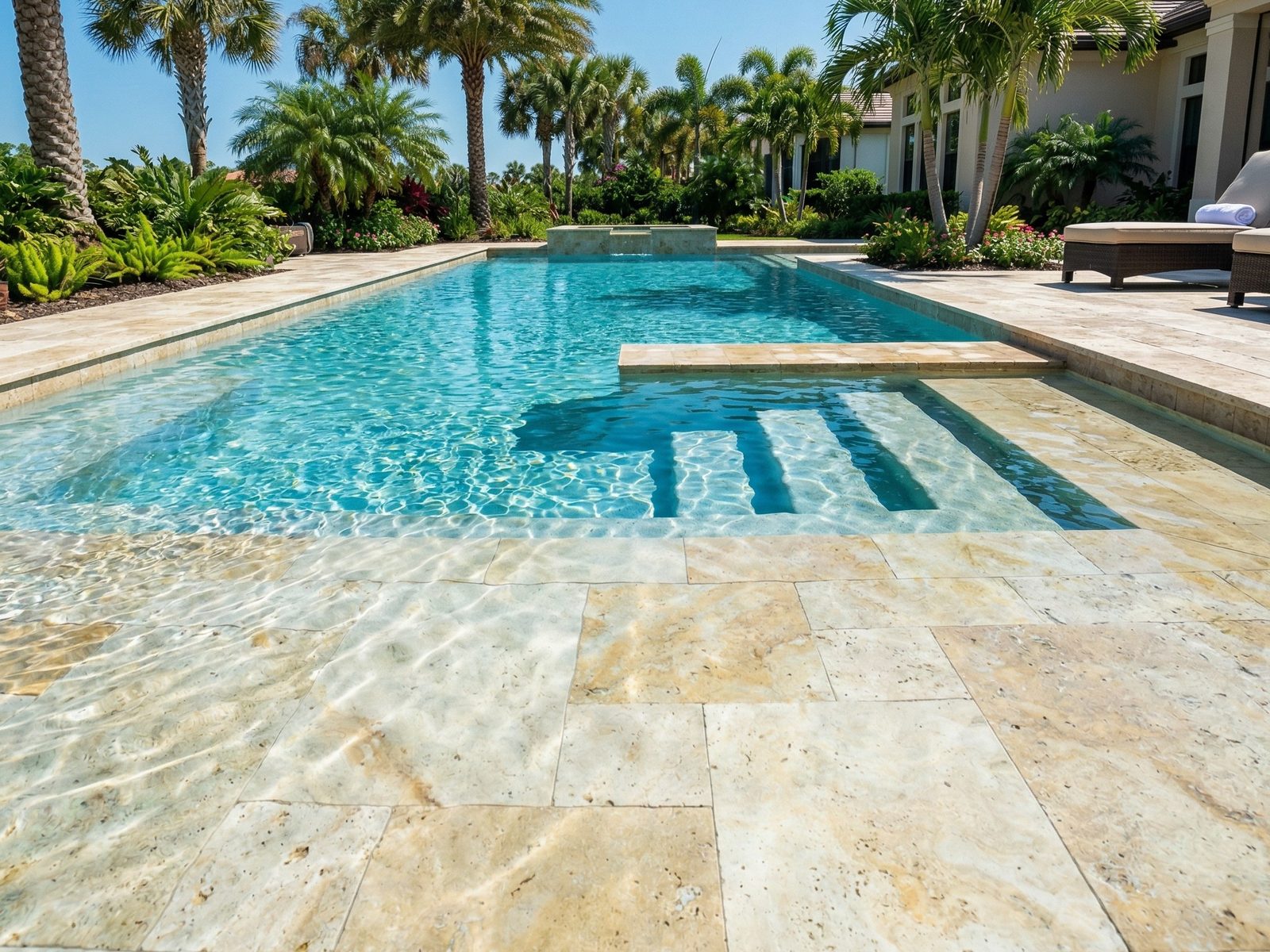
Porcelain is the right call for high-traffic floors, kitchens, bathrooms, showers, and outdoor patios and pool decks โ essentially anywhere durability and moisture resistance matter most. Wood-look porcelain planks give Miami homeowners the look of hardwood floors without the moisture vulnerability that real wood has in our climate, which is why it's become one of the most requested materials we install.
It's also increasingly used indoors and outdoors on the same continuous plane โ a great room floor that carries the same porcelain tile through a set of sliding doors onto a covered patio, for example โ which creates a seamless indoor-outdoor look that's become popular in newer Miami-Dade construction and major renovations alike.
Cost & Durability
Porcelain generally sits in the middle of the cost range โ more than basic ceramic, less than natural stone โ and its durability and low maintenance make it one of the better long-term values for Miami-Dade homes. Large-format porcelain and slab-look panels cost more in both material and labor due to the specialized handling and mortar they require, but they cut down significantly on grout-line maintenance over the life of the floor or wall.
Because porcelain doesn't need sealing and resists staining from nearly everything short of some dyes and strong solvents, its lifetime maintenance cost is meaningfully lower than natural stone's โ a consideration worth weighing alongside the higher upfront cost of stone when comparing the two materials over a ten- or twenty-year horizon.
Common Misconceptions: Porcelain vs. Ceramic vs. Stone-Look
Many homeowners use "porcelain" and "ceramic" interchangeably, but the water-absorption difference is exactly why one performs better in Miami's climate and wet areas than the other. There's also a common assumption that stone-look porcelain performs identically to real stone โ it actually performs better in most practical ways, since it doesn't need sealing and won't etch from acidic cleaners the way natural stone can, while still delivering a convincing stone appearance.
The other misconception we hear often is that all porcelain looks obviously fake compared to real wood or stone โ modern high-definition printing technology used in current porcelain manufacturing has closed that gap substantially, to the point where distinguishing a quality wood-look porcelain plank from real hardwood at a glance is genuinely difficult for most people.
Porcelain in Miami's Coastal & Humid Environment
Beyond water absorption, porcelain's chemical stability matters in a coastal environment โ it won't react with salt air, pool chemicals, or the humidity swings that come with South Florida's rainy season, all of which can slowly affect more porous or reactive materials over time. For homes within a few miles of the coast in Miami Beach, Brickell, or similar areas, that stability is one more reason porcelain tends to outperform other materials over the life of the installation.
Porcelain Tile Installation FAQs
Is porcelain tile a good choice for a Florida climate?
Yes โ porcelain's low water absorption makes it one of the best-performing tile materials for South Florida's humidity, and it's our default recommendation for showers, bathrooms, and outdoor spaces specifically because of that resistance to moisture.
What's the difference in cost between porcelain and natural stone?
Porcelain is generally less expensive than natural stone in both material and installation labor, and it requires no sealing or ongoing maintenance the way stone does. Stone-look porcelain has closed much of the visual gap, which is why many clients choose it over real stone for the lower long-term cost and maintenance.
Areas We Serve
Proudly providing tile installation across the region:
- Coral Gables, FL
- Miami Beach, FL
- Kendall, FL
- Doral, FL
- Aventura, FL
- Brickell, FL
- Pinecrest, FL
- Hialeah, FL
- Homestead, FL
- Cutler Bay, FL
- Miami Lakes, FL
- South Miami, FL
Get Porcelain Tile Installation in Miami Today
Fast response, upfront pricing, and friendly local pros. Call now for a free quote.
๐ Call (305) 501-6723